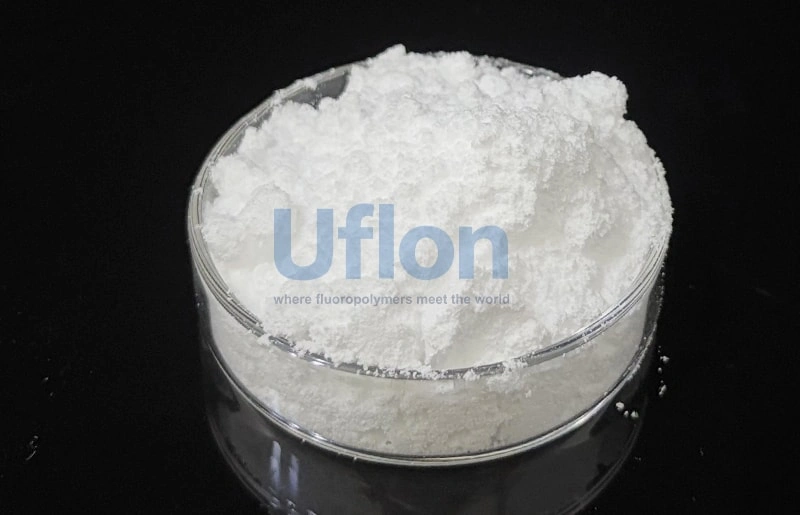

PTFE additive for elastomer can improve the products performance in many aspects, without significantly sacrificing the intrinsic elasticity of the elastomers. This expands its application range in high-end industries, meeting the high-performance demand for manufacturing.
Improved surface properties: release properties, friction and lubrication.
Enhanced mechanical properties: tear strength, abrasion resistance, flexural life.
Expanded application temperature range: suitable for special environments such as high-temperature chemical processing and low-temperature aerospace.
Special function integration: suitable for fields with extremely high environmental adaptability and performance requirements, such as semiconductors, medical devices, and electronics.
Sealing: Mechanical seals, automotive engine seals.
Wear-resistant components: Bearings and sliding parts, gears and chains.
Electronics and Electrical: Insulating materials, semiconductor equipment components.
Chemical and Petroleum: Pipeline linings and gaskets, reactor seals and agitator components.
Aerospace: Hydraulic system seals, engine components.
Medical: Artificial organs and implants, medical device components.
New Energy: Fuel cell components, battery cooling system seals.
| No. | ITEM | UNIT | VALUE |
|---|---|---|---|
| 1 | Appearance | White Powder | |
| 2 | Bulk Density | g/L | 200-400 |
| 3 | Melting Point | ℃ | 327±5 |
| 4 | D50 (Average particle size) | um | 2-5 |
| 5 | D10 ≤ | um | 2 |
| 6 | D90≤ | um | 10 |
| 7 | Dmax≤ | um | 15 |
| 8 | Specific surface area | m²/g | 8-13 |
| 9 | Melting Index | g/10min | 1-3 |
Mainly used as an additive for paints, elastomer and grease.
100 meters northwest of Changiiafang Village Committee, Gaoging County, Zibo City, ShandongProvince
Copyright © 2025 by Zibo Uflon New Material Technology Co., Ltd. All Rights Reserveds
Privacy Policy