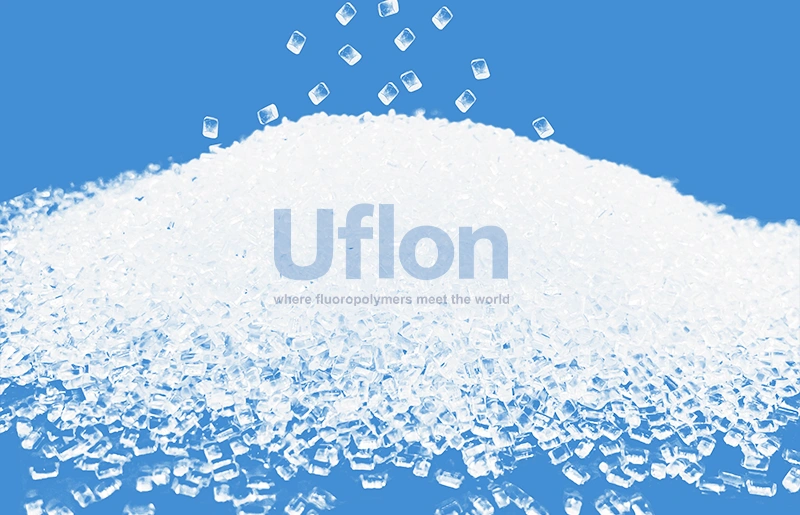

PFA resin is a copolymer of perfluoropropyl perfluorovinyl ether and polytetrafluoroethylene(PTFE). Due to outstanding properties, PFA resin is often used to produce wire cable across aerospace,nuclear power plant,subway,oil well and other demanding fields.
Temperature range: -200°C to +260°C (long-term use), short-term resistance up to 300°C.
Chemical inertness: Resistant to strong acids,alkalis, organic solvents and oxidants; only a few molten metals or fluorides affect it.
Ultra-low permeability: Dense molecular structure provides high barrier properties to gases and liquids.
Dielectric properties: Dielectric constant 2.1 (1MHz), low dielectric loss, suitable for high-frequency electronic components.
Low coefficient of friction: Smooth surface (coefficient of friction 0.05-0.08), strong anti-adhesion properties.
Mechanical toughness: Better resistance to bending fatigue than PTFE, tensile strength reaches 32MPa+.
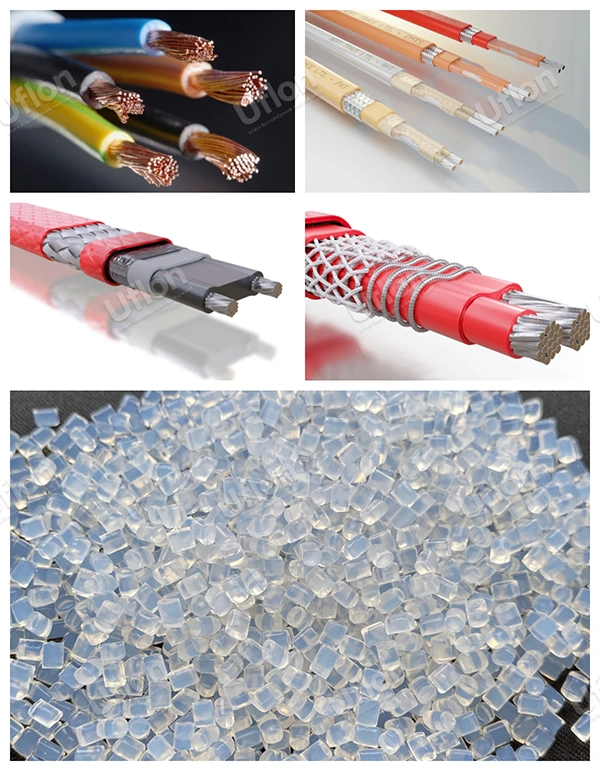
PFA material performs particularly well in the field of wire and cable insulation. It can be continuously used at 260°C, making it ideal for manufacturing heating wires and special wires.
(1) Heating wire cable
PFA heating wire cable is ideal for heating systems due to their high temperature resistance and stress crack resistance. Compared to traditional steam heating, PFA heating wire cable offer better insulation, easier control, and cost-effectiveness. They are particularly widely used in heating shorter pipes.
The SECT method is a pipe heating method that utilizes the surface effect of alternating current(AC). PFA wires are passed through the SECT pipe with alternating current, causing the inner wall of the pipe to heat up. This structure not only utilizes the heat resistance and stress cracking resistance of PFA, but also its low friction, making the PFA wires to be easily laid inside the heated steel pipe.
(2) Specialty Cables
In the field of geothermal power generation, the application of PFA cables is also crucial. Geothermal power generation requires converting high-temperature, high-pressure steam from deep underground sources into electrical energy by turbine generators. In this environment, cables need to withstand high temperatures and corrosion from hydrogen sulfide gas. Due to its resistance to high-temperature steam and corrosion, PFA cables have become an ideal choice for geothermal exploration and power generation.
| No. | ITEM | UNIT | VALUE | TEST STANDARD |
|---|---|---|---|---|
| 1 | Appearance | Translucent particle | ||
| 2 | Melting Index (MFR) | g/10min | 20-30 | ASTM D1238 |
| 3 | Tensile strength ≥ | Mpa | 32 | ASTM D638 |
| 4 | Elongation ≥ | % | 340 | ASTM D638 |
| 5 | Relative Gravity | g/cm³ | 2.12-2.17 | ASTM D792 |
| 6 | Melting Point | ℃ | 290-315 | ASTM D3418 |
| 7 | Water Absorption≤ | % | 0.01 | ASTM D570 |
Used to produce wire and cable based on high speed extrusion process.
100 meters northwest of Changiiafang Village Committee, Gaoging County, Zibo City, ShandongProvince
Copyright © 2025 by Zibo Uflon New Material Technology Co., Ltd. All Rights Reserveds
Privacy Policy