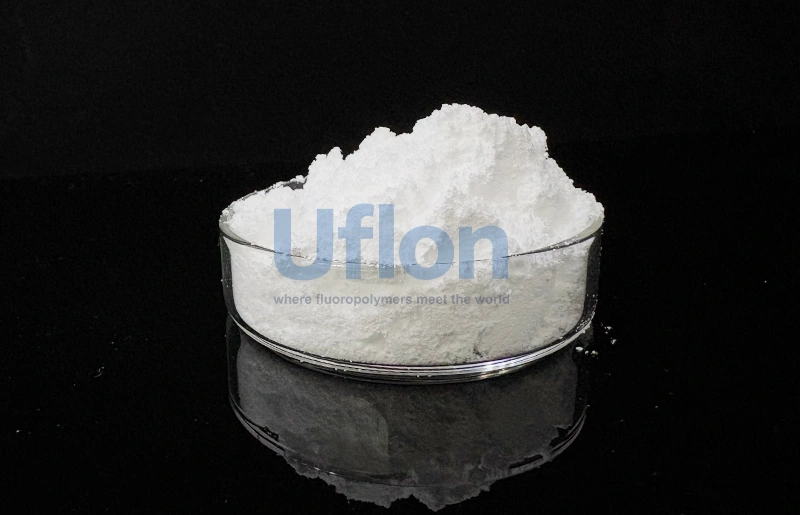

Based on filtration precision and the pore size of the filter membrane, water treatment membrane technologies are generally classified into four main categories: micro-filtration (MF), ultra-filtration (UF), nano-filtration (NF), and reverse osmosis (RO). These membrane separation products all utilize the interception capabilities of specially manufactured porous materials to remove a certain particle size impurities from the water through physical retention. PVDF resin is one of the most commonly used membrane materials.
Water treatment membranes made of PVDF resin exhibit excellent stability against organic solvents such as aromatic hydrocarbons, aliphatic hydrocarbons, alcohols, and aldehydes. They also maintain excellent corrosion resistance to acids, alkalis, strong oxidants, or halogens at room temperature and can maintain structural stability even under prolonged ultraviolet radiation. In addition, they have low creep properties, strong hydrophobicity, and antifouling properties.
Non-solvent-induced phase separation (NIPS)
Thermal-induced phase separation (TIPS)
Vapor-induced phase separation (VIPS)
Solution casting
Electrospinning technology
| No. | ITEM | UNIT | VALUE | TEST STANDARD |
|---|---|---|---|---|
| 1 | Solubility | the solution is clear without impurity and insoluble substance | ||
| 2 | Relative Density | / | 1.75-1.79 | GB/T 1033 |
| 3 | Melting Point | ℃ | 156-175 | GB/T 28724 |
| 4 | Thermal decomposition temperature≥ | ℃ | 380 | GB/T 33047 |
| 5 | Water Content ≤ | % | 0.1 | GB/T 6284 |
| 6 | Rotational Viscosity | mpa·s | 1000-4000 | 30,0.1g/gDMAC |
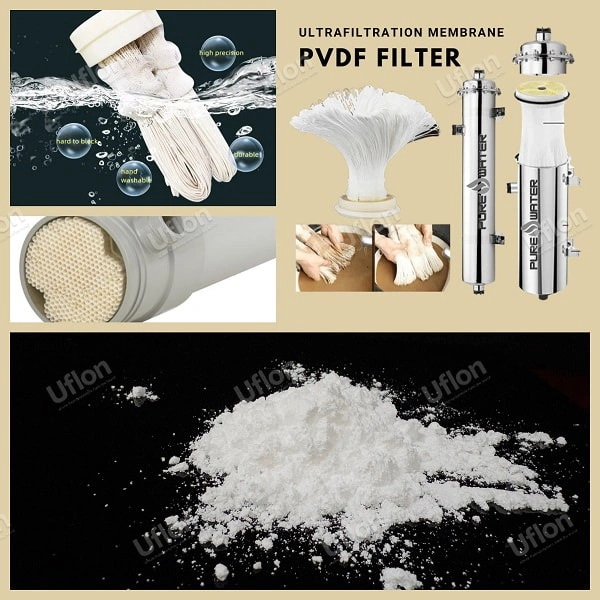
It is used to produce PVDF membrance materials for water treatment
100 meters northwest of Changiiafang Village Committee, Gaoging County, Zibo City, ShandongProvince
Copyright © 2025 by Zibo Uflon New Material Technology Co., Ltd. All Rights Reserveds
Privacy Policy