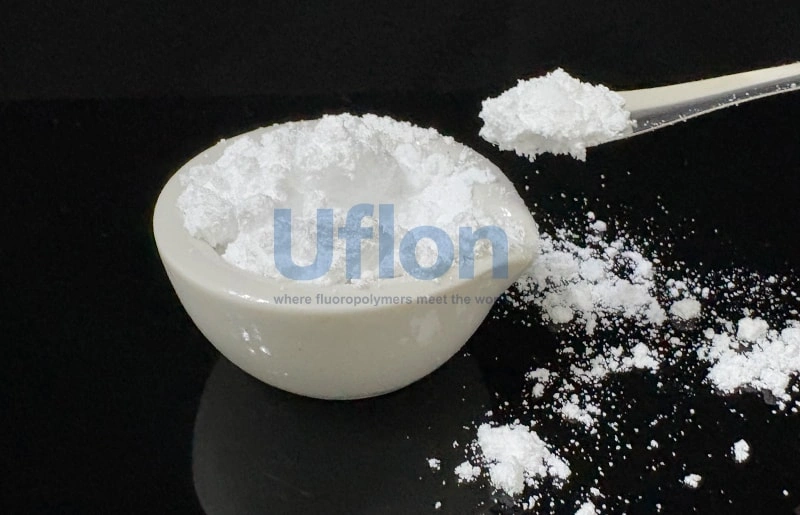

PTFE dry electrode binder is a core material in dry electrode technology. Its fibrous properties provide key technical support for the manufacture of high-energy-density, high-capacity electrodes, and it is one of the important materials driving battery technology towards green and efficient directions.
PTFE is a semi-crystalline polymer with a chemical structure of -(CF₂)-ⁿ. Its molecular chains are tightly wrapped by fluorine atoms, exhibiting extremely high chemical stability, heat resistance (melting point approximately 322-332℃), and a low coefficient of friction. It hardly reacts with other substances and can remain stable for long periods in the battery operating environment.
Mechanical Bonding: The fiber network effectively fixes the electrode material, preventing particle detachment and ensuring the structural stability of the electrode during charge and discharge.
Ion Transport: The fibrous structure makes point contact with the active material particles, without affecting the insertion/extraction of lithium ions on the surface of the active material, which is beneficial for improving battery capacity and charge/discharge efficiency.
Environmentally Friendly: The dry process eliminates the need for organic solvents, reducing environmental pollution and solvent recycling costs, aligning with the sustainable development trend of battery manufacturing.
When used as a negative electrode, PTFE may occur side reactions with lithium, consuming active lithium and reducing the binding effect. Therefore, it is often necessary to improve electrochemical stability and comprehensive performance through surface modification (such as carbon coating) or by mixing it with other binders.
| No. | ITEM | UNIT | VALUE | |
|---|---|---|---|---|
| Positive Pole | Negative Pole | |||
| 1 | Cleaness | Excellent Grade | ||
| 2 | Bulk Density | g/l | 500±100 | 450±100 |
| 3 | Tensile Strength ≥ | Mpa | 25 | 24 |
| 4 | Elongation ≥ | % | 300 | 350 |
| 5 | Particle Size | um | 425-525 | |
| 6 | Moisture Content≤ | % | 0.03 | |
| 7 | Standard Relative Density | 2.125-2.160 | 2.150-2.200 | |
| 8 | Maximum Reduction Ratio | 400:1 | 400:1 | |
| 9 | Extrusion Pressure | Mpa | 45.0-55.0(400:1) | 25.0-35.0(400:1) |
| 10 | PFOA Content≤ | ppb | 25 | 25 |
Specially designed as a binder in dry electrode technology.
100 meters northwest of Changiiafang Village Committee, Gaoging County, Zibo City, ShandongProvince
Copyright © 2025 by Zibo Uflon New Material Technology Co., Ltd. All Rights Reserveds
Privacy Policy