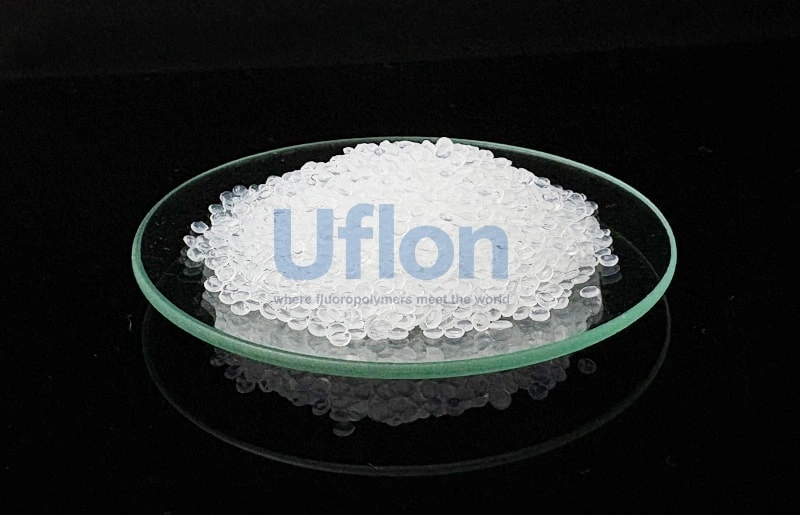

Polyvinylidene fluoride (PVDF) is a highly non-reactive thermoplastic fluoropolymer, primarily produced by free radical polymerization of vinylidene fluoride (VDF) monomers. The carbon-fluorine bond in its molecular structure is one of the strongest known chemical bonds, endowing PVDF with excellent chemical stability and physical properties.
Polyvinylidene fluoride (PVDF) is a highly non-reactive thermoplastic fluoropolymer, primarily produced by free radical polymerization of vinylidene fluoride (VDF) monomers. The carbon-fluorine bond in its molecular structure is one of the strongest known chemical bonds, endowing PVDF with excellent chemical stability and physical properties.
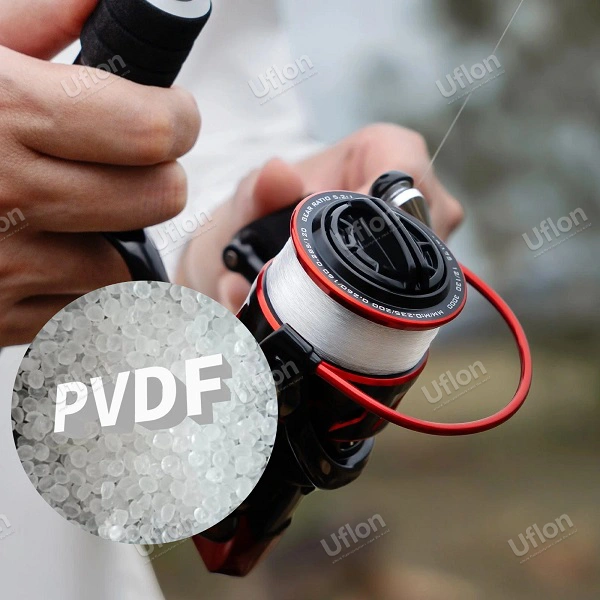
PVDF, with its high strength, can be used to make professional monofilament fishing lines, replacing traditional nylon monofilament. PVDF resin for fishing lines mainly used in high-end scenarios or those with high requirements for monofilaments.
Its light refractive index is very close to that of water, allowing for invisible casting and increasing the bite rate of target fish.
It has excellent water-cutting properties, sinks quickly to the bottom, and has a high specific gravity, providing clear and obvious lure action transmission, ensuring the lure can reach deep swimming layers.
It has zero water absorption; its knot strength, normal tensile strength, and elongation remain unchanged in both dry and wet conditions, and its elasticity and stiffness remain constant.
It is more sensitive than nylon line, quickly transmitting the lure bite signal and ensuring you don't miss the optimal time to set the hook.
The surface coating provides excellent UV resistance; prolonged casting in sunlight will not affect the line's strength.
It is extremely strong and abrasion-resistant, with higher abrasion resistance than nylon line.
| No. | ITEM | UNIT | VALUE |
|---|---|---|---|
| 1 | Appearance | Pellet/Powder | |
| 2 | Melting Index(230℃,10KG) | g/10min | 2-8 |
| 3 | Tensile Strength≥ | Mpa | 35 |
| 4 | Elongation≥ | % | 25 |
| 5 | Relative Density | / | 1.75-1.79 |
| 6 | Melting Point | ℃ | 165-175 |
| 7 | Thermal decomposition temperature≥ | ℃ | 380 |
| 8 | Hardness | Shore D | 70-80 |
Mainly used for PVDF fishing lines and other high-strength lines.
100 meters northwest of Changiiafang Village Committee, Gaoging County, Zibo City, ShandongProvince
Copyright © 2025 by Zibo Uflon New Material Technology Co., Ltd. All Rights Reserveds
Privacy Policy