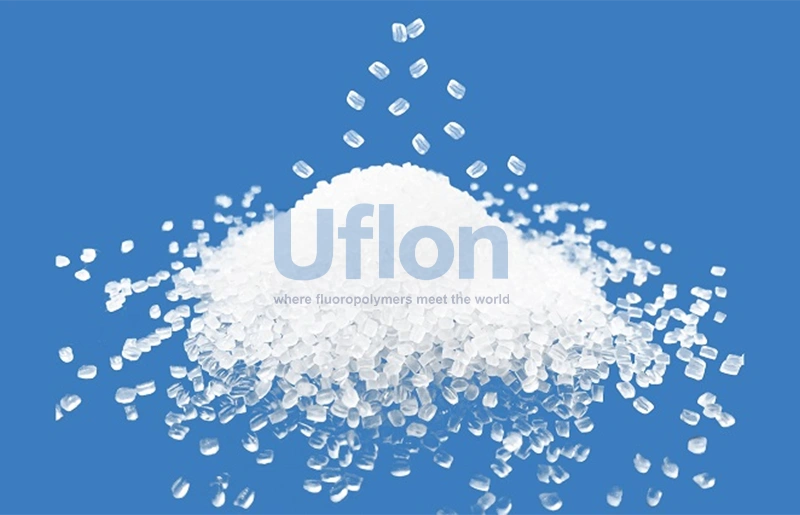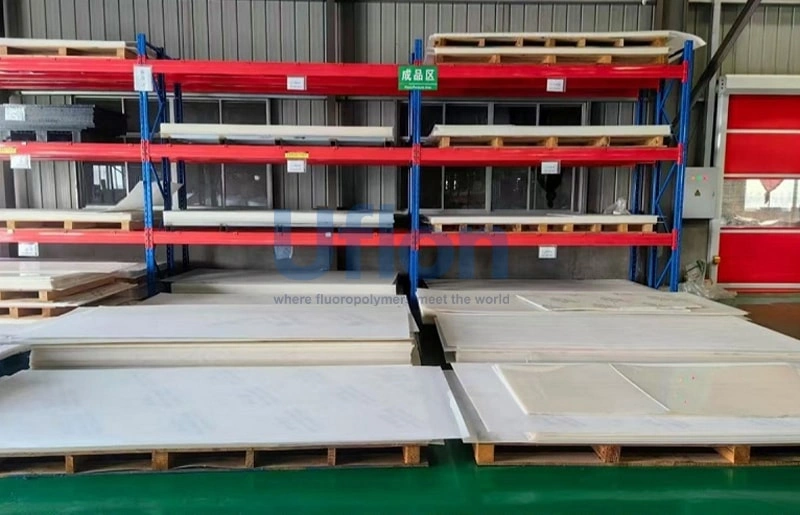
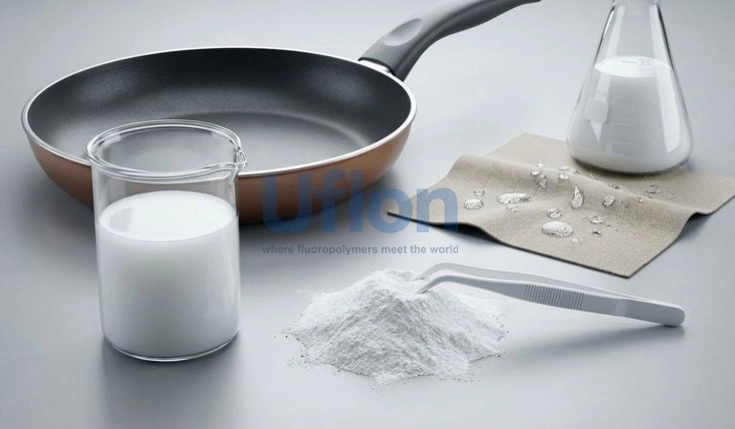
As an important member of the fluoroplastic family, PTFE dispersion is widely used in various industrial fields such as coatings, adhesives, and textile finishing due to its excellent corrosion resistance,high-temperature resistance, and low surface energy.
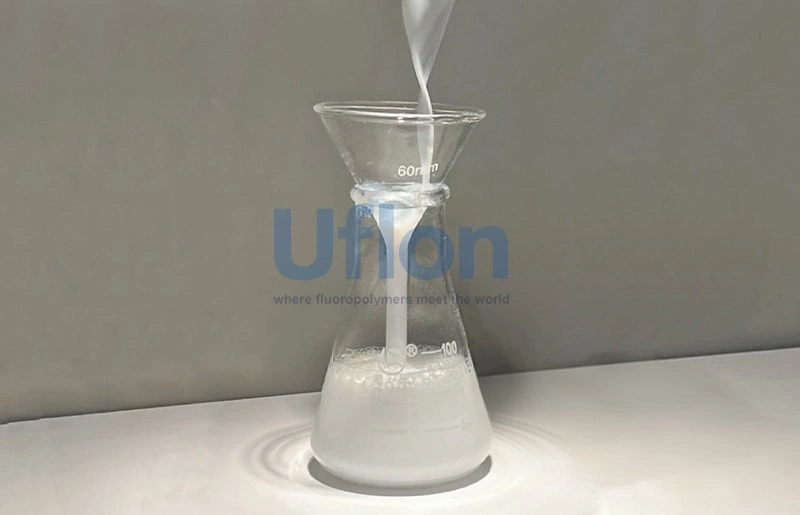
However, the environmental characteristics of low temperature and high humidity in winter can disrupt the stable system of PTFE dispersion from the thermodynamic and kinetic perspectives, and also affect the construction process and curing effect. The main problems are concentrated in the following four aspects:
1. The stability of the emulsion decreases, with phenomena such as stratification, flocculation, and even demulsification occurring.
2. The viscosity abnormally increases, significantly raising the difficulty of construction.
3. The curing rate slows down, and the performance of the coating deteriorates.
4. There is a risk of freeze damage during storage and transportation.
Before any problems occur with the PTFE dispersion, strict control measures should be formulated to avoid risks in advance. The main measures are concentrated in the following four aspects:
1. Storage: Strictly control temperature and humidity, and take good protective measures.
2. Pre-treatment stage: Scientific thawing and stirring to ensure uniformity of the PTFE dispersion
3. Construction stage: Strictly control environmental conditions and optimize construction parameters
4. Curing stage: Ensure curing conditions and extend curing time
For various problems that have occurred during winter, targeted solutions should be adopted to minimize losses, specifically focusing on the following four points:
1. PTFE dispersion stratification and flocculation: Determine feasibility and handle scientifically
If the emulsion shows slight stratification without obvious clear liquid on the top layer, it can be moved to a constant temperature environment and stirred at low speed for more than 30 minutes to observe if the emulsion returns to a uniform state. If it becomes uniform after stirring, take samples to test viscosity, solid content, etc. If the indicators meet the standards, it can be used normally. If there is obvious flocculation, sedimentation, or it cannot return to a uniform state after stirring, it indicates that the emulsion has partially broken, and it should not be used. For flocculation caused by the mixing of metal ions, under the guidance of the manufacturer, an appropriate amount of ion exchange resin can be added to reduce the metal ion content in the emulsion and improve stability.
2.PTFE dispersion abnormal increase in viscosity: Adjust reasonably and avoid forced stirring
If the viscosity of the emulsion is slightly high, it can be made uniform by extending the low-temperature stirring time (10-15 minutes). If the viscosity is too high to stir, the emulsion can be moved to an environment at around 25℃ to warm up for 2-4 hours, and then stirred at a low speed. It is strictly prohibited to add tap water at will to reduce the viscosity. If dilution is needed, the special diluent provided by the manufacturer should be used, and the dilution ratio should not exceed 5%. After dilution, stir thoroughly until the viscosity meets the standard before construction.
3. Inadequate curing and poor adhesion of the coating: Re-bake and rework
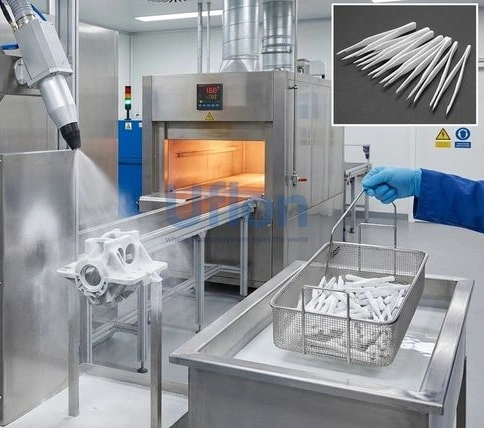
If the coating shows inadequate curing (surface stickiness, insufficient hardness), it can be re-baked in an oven. The re-baking temperature should be 10-20℃ lower than the original curing temperature, and the re-baking time should be 1.5 times the original time to ensure complete evaporation of moisture and solvents. If the coating has already peeled or fallen off, the failed coating should be completely removed, the substrate should be pre-treated again, and then the construction should be carried out according to the standard process. For poor adhesion caused by moisture in the substrate, a preheating step can be added during substrate pre-treatment to remove surface moisture and enhance the interfacial bonding strength.
4. Rust spots and pinholes on the coating surface: Optimize the environment and take targeted protective measures
If rust spots appear on the coating surface, it is necessary to check whether the substrate pre-treatment is adequate and whether the construction environment humidity is too high. The solutions are: thoroughly remove the rust spot area, re-sandblast the substrate, shorten the interval between pre-treatment and construction; at the same time, reduce the construction environment humidity to ensure that the relative humidity is ≤ 60%. If pinholes occur, it is mostly due to rapid moisture evaporation or too fast temperature rise during curing. The curing process can be adjusted, the temperature rise rate can be reduced, and the low-temperature pre-baking time can be extended to allow moisture to evaporate slowly.
When you have other confusion on PTFE dispersion, just contact with Uflon.
100 meters northwest of Changiiafang Village Committee, Gaoging County, Zibo City, ShandongProvince
Copyright © 2025 by Zibo Uflon New Material Technology Co., Ltd. All Rights Reserveds
Privacy Policy