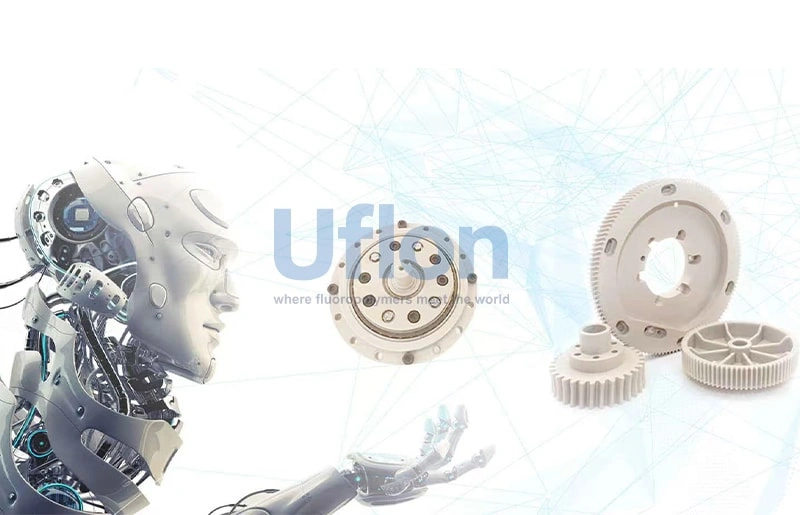
With the development of technology, robots are appearing in our lives and are expected to be greatly developed. High-performance speciality plastic PEEK is becoming a new favorite in the manufacture of core structural components for robots, which making robots lighter, stronger, and more flexible and efficient, closer to living organisms.

I. PEEK Material Properties and Core Advantages
Extremely Lightweight
● With a density of only 1.3g/cm³, half that of aluminum alloy and one-sixth that of steel, it significantly reduces the robot's weight. The Tesla Optimus Gen2 reduced weight by 10kg (73kg → 63kg) through PEEK application, while increasing the walking speed by 30%.
● Benefits of Weight Reduction: Reduced energy consumption, increased range, enhanced mobility, and reduced load on components.
Superior Overall Performance
● Mechanical Properties: Tensile strength reaches 90-100MPa, and after carbon fiber reinforcement (CF/PEEK), it can reach 200MPa, approaching the level of high-strength aluminum alloys.
● High Temperature Resistance: Long-term operating temperature 260℃, short-term temperature resistance 300℃+, suitable for high-power motor environments.
● Self-Lubricating Properties: Low coefficient of friction as low as 0.1, reducing joint friction loss by 80% and extending component life by more than 3 times.
● Corrosion Resistance and Insulation: Strong resistance to chemical corrosion and an ideal electrical insulator, ensuring the safety of electronic components.
Application Scenes Adaptability
● Core Components: Joint bearings, transmission gears, and skeleton structure (e.g., Optimus's CF/PEEK skeleton reduces weight by 40%).
● Composite Technology: Carbon fiber reinforced PEEK further enhances strength, adapting to high dynamic load scenarios.
II. The Application Value of PEEK in Humanoid Robots
Unit Usage and Economy
● Unit requirement: approximately 6.6kg/unit (1kg pure PEEK gears + 5.6kg CF/PEEK limb structure), accounting for 1.5%-2.2% of the cost.
● Mass production driven: If global sales of humanoid robots reach 600,000 units by 2030, the demand for PEEK will explode, and the market size may reach 25.9 billion yuan.
Performance Comparison Table: PEEK VS Traditional Materials
|
Performance |
PEEK |
Aluminium alloy |
Steel |
|---|---|---|---|
|
Density (g/cm³) |
1.3 |
2.7-2.8 |
7.8-7.9 |
|
Tensile strength (MPa) |
90-100 (original) |
170-472 |
276-1882 |
|
Temperature resistance (°C) |
260 |
150-200 |
400-600 |
|
friction coefficient |
0.1-0.3 |
Additional lubrication required |
Additional lubrication required |
III. Market Prospects and Growth Drivers
Market Size
● Global: RMB 6.1 billion in 2024, projected to exceed RMB 8.4 billion in 2027 (CAGR 11.4%).
● China: RMB 1.9 billion in 2024, potentially reaching RMB 5 billion in 2027 (CAGR 25%+), leading the global growth rate.
Core Driving Forces
● Mass Production of Humanoid Robots: Demand is being driven by companies such as Tesla's Optimus, XPeng's Iron (target weight 70kg), and Unitree Robotics, with global sales potentially reaching 600,000 units by 2030.
● Policy Support: The Ministry of Industry and Information Technology has listed PEEK as a key area for new materials, promoting the development of a standards system.
● Cost Reduction: The price of domestically produced PEEK has dropped to 400-500 RMB/kg (50% of imports), with further cost reductions through large-scale production.
Incremental Demand
● Single-Sector Potential: If the annual production of humanoid robots reaches one million units, PEEK will see an additional market size of 5-10 billion yuan.
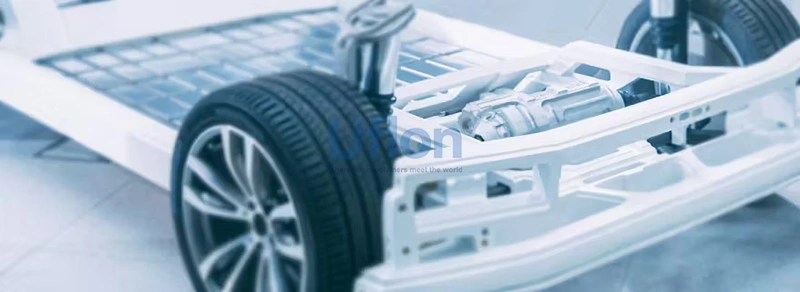
● Multi-Scenario Penetration: Synergistic growth in new energy vehicles (battery components), aerospace (lightweight structures), and medical (implants).
Conclusion
PEEK, with its lightweight and high performance, has become a core material for humanoid robots.The breakthrough in domestic industrialization of the supply chain and the explosive growth in downstream demand are creating a double tailwind. In the short term, attention should be paid to the progress of capacity expansion; in the long term, it is necessary to monitor technological substitution and cost control capabilities.
100 meters northwest of Changiiafang Village Committee, Gaoging County, Zibo City, ShandongProvince
Copyright © 2025 by Zibo Uflon New Material Technology Co., Ltd. All Rights Reserveds
Privacy Policy