On June 5, 2024, the U.S. Environmental Protection Agency (EPA) proposed restricting the use of NMP. NMP is used as a solvent in the production of lithium-ion battery cathode electrodes and their raw materials (such as graphene conductive slurry, solid electrolyte slurry etc) ,which fuse the required substances together, allowing the raw materials to perform at their best. If the use of NMP is banned in lithium-ion battery production, then PTFE dry electrode technology is highly likely to be the replacement.
Tesla recently announced that its 4680 battery has successfully applied PTFE dry electrode technology. Volkswagen subsidiary PowerCo SE also recently announced that it plans to introduce dry coating technology to its battery production plants in Europe and North America. The dry coating technology is expected to reduce the energy consumption of PowerCo's battery plants by about 30% and reduce the ground space required for battery production by 15%.
Inherent Defects of Wet Processes
Cost and Environmental Burden: Toxic solvents such as NMP require complex recovery systems; the drying process accounts for over 35% of manufacturing energy consumption.
Interface Degradation: Sulfide electrolytes react with solvents to generate H₂S, leading to a decrease in ionic conductivity (up to 30%).
Microstructure Uncontrolled Development: During drying, binder migration creates compositional gradients, and conductive agent aggregation blocks ion channels.
Advantages of PTFE dry electrode technology
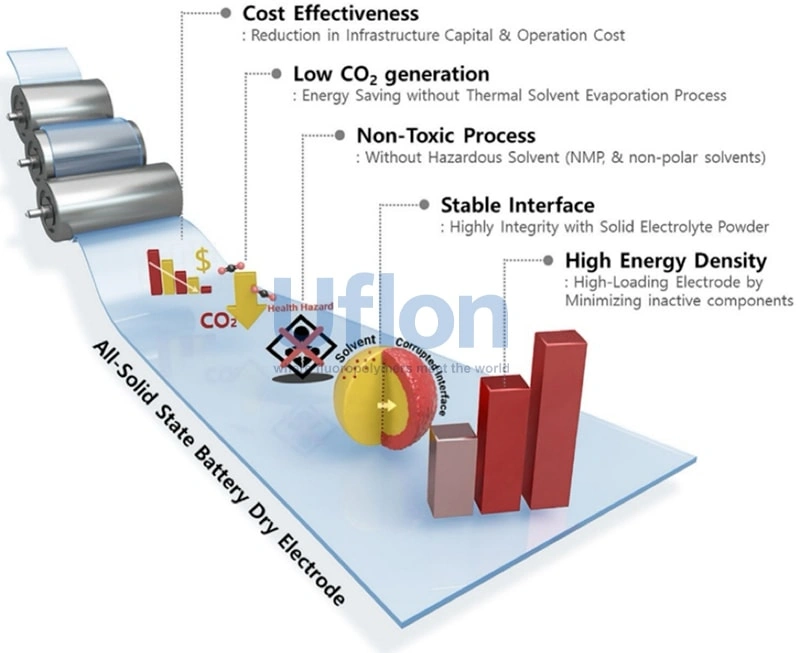
Comparison of process principles
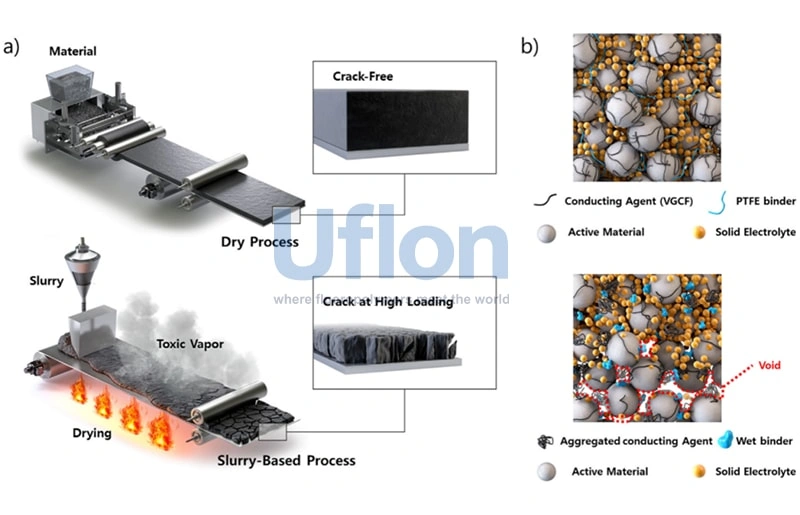
Wet electrode process: Active material, conductive agent, binder, and solvent (such as NMP) are mixed into a slurry → coated onto the current collector → high-temperature drying (high energy consumption) → solvent recovery (requires supporting equipment).
Dry electrode process: Solvent-free mixing → PTFE binder undergoes high-shear fibrillation to form a self-supporting film → direct roll forming of the composite current collector.
Why choose PTFE material in dry electrode process?
The dry process is to fiberize solid binders to form a three-dimensional "network" structure, thereby achieving the bonding function.
Not all PTFE resin is suitable for dry electrode process. Modifying the specific PTFE grade to meet performance requirements including ultra-high molecular weight, high mechanical strength, high viscosity, high flexibility, stable electrochemical properties, and creep resistance.
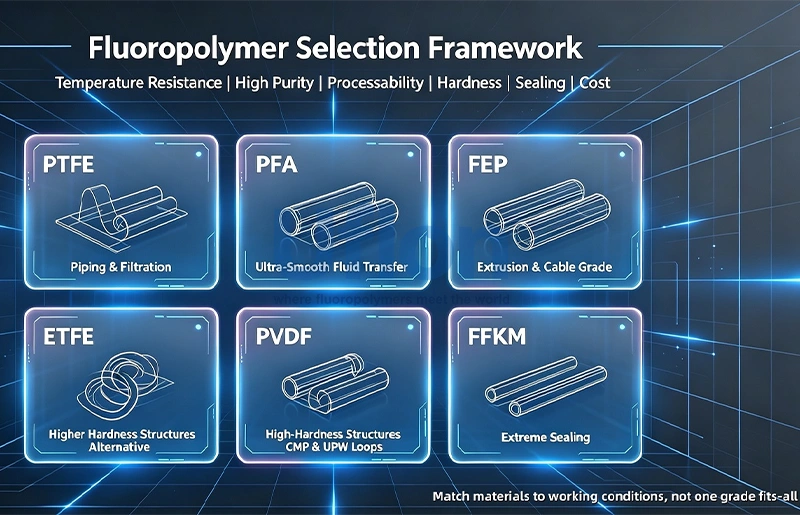
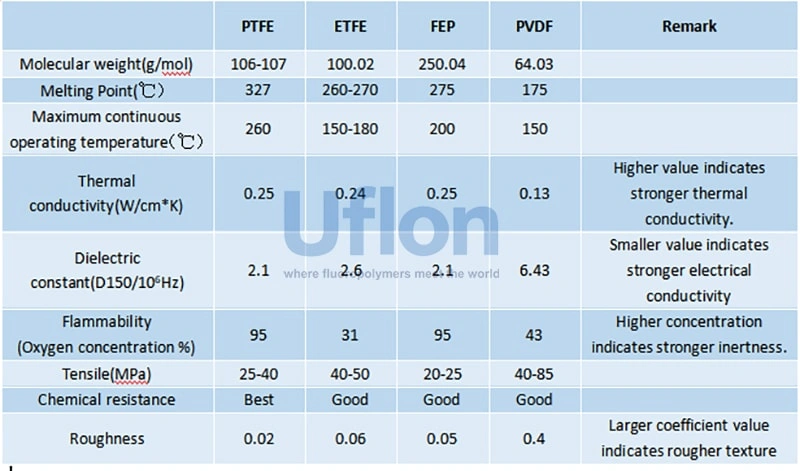
The binders that can be used in dry electrode fabrication mainly include PTFE, ETFE, PVDF, and FEP, among which PTFE has obvious advantages.
Comparison of the performance of dry electrode binder
Conclusion
PTFE dry electrode technology will drive rapid growth in PTFE materials demand. In traditional wet-process batteries, PVDF is used as the positive electrode binder, accounting for 2% by weight; CMC+SBR is used as the negative electrode binder, accounting for 3% by weight. In dry-process batteries, PTFE is suitable for both the positive and negative electrodes, increasing its weight to 5-8%. With the gradual increase in the penetration rate of dry-process technology, the demand growth rate for PTFE in dry electrodes can reach four times that of PVDF.
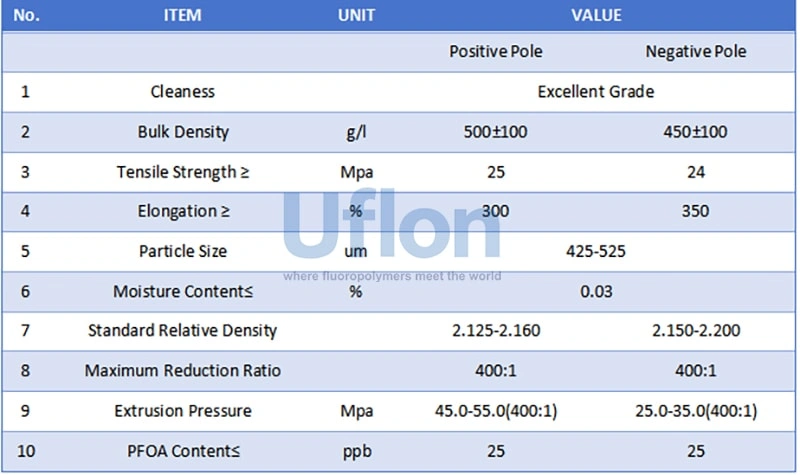
As a professional and service-oriented fluoropolymer resin manufacturer, Uflon keeps up with the times, strive to meet customer application demands, leads the market development. Our developed PTFE UF-213 has been successfully put into use in the market and achieved good results.
100 meters northwest of Changiiafang Village Committee, Gaoging County, Zibo City, ShandongProvince
Copyright © 2025 by Zibo Uflon New Material Technology Co., Ltd. All Rights Reserveds
Privacy Policy