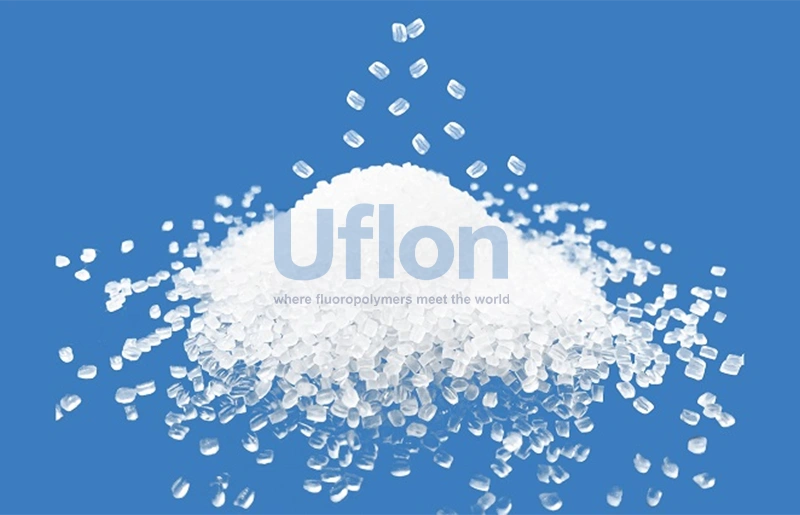
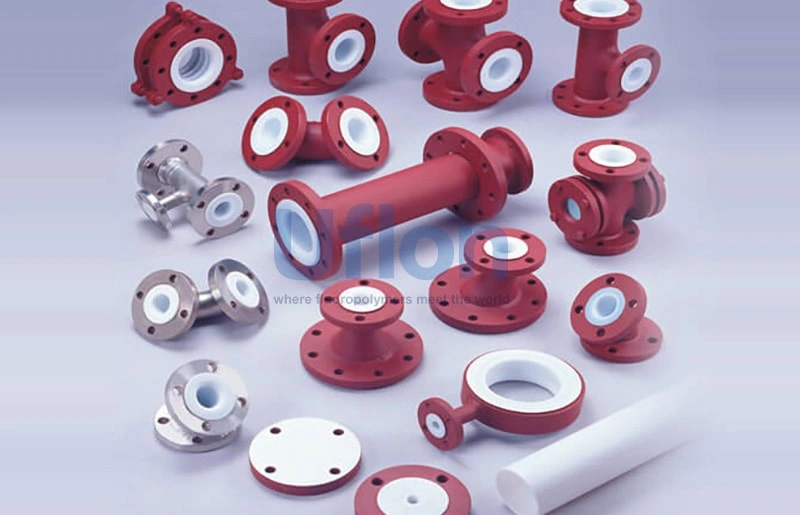
PTFE is a non-metallic crystalline polymer and an important specialty engineering plastic. It possesses excellent thermal and chemical stability, strong corrosion resistance, can withstand almost all strong acids, strong oxidizing agents, reducing agents, and organic solvents. It also has a wide operating temperature range.
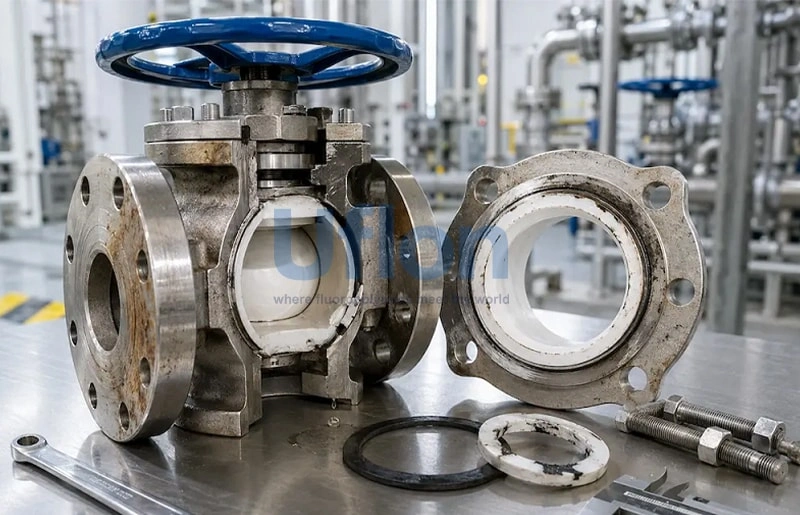
However, PTFE's strength is lower than that of metals and decreases with increasing temperature. Therefore, PTFE cannot be used for pressure-bearing components in corrosion-resistant chemical equipment, it is generally used as a PTFE lining for equipment.
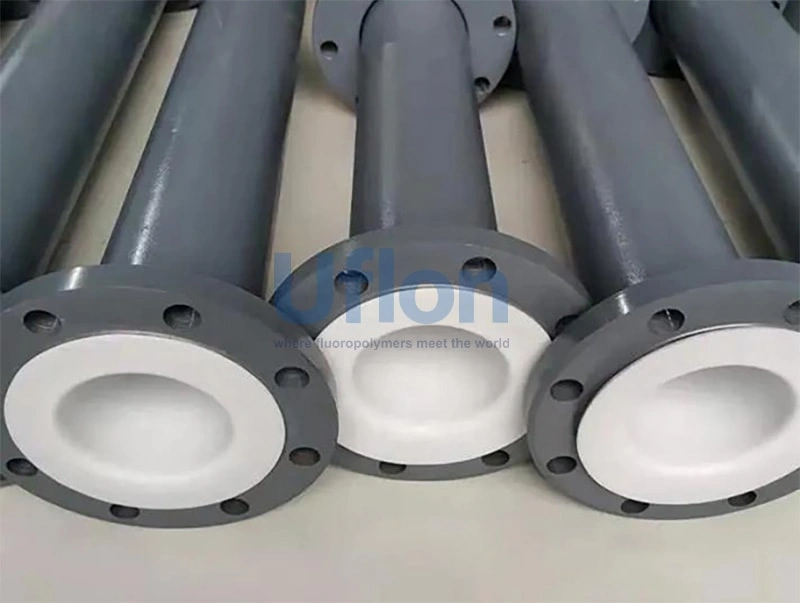
Loose lining and tight lining
Loose lining and tight lining are two commonly used structures for PTFE lining.
The loose-lined structure process: firstly sintering PTFE into shape, then inserting it into the equipment, flanging it, and securing it with bolts. The advantages of this structure are its simple process and fast molding; the disadvantages are that a certain gap inevitably exists between the metal substrate and the lining. When in a working environment with negative pressure and large temperature variations, this can easily cause lining collapse, bubbling, and cracking at the flanged edges, affecting the normal operation of the equipment. Therefore, it is generally used in pipes and cylinders that withstand internal pressure with minimal temperature variations.
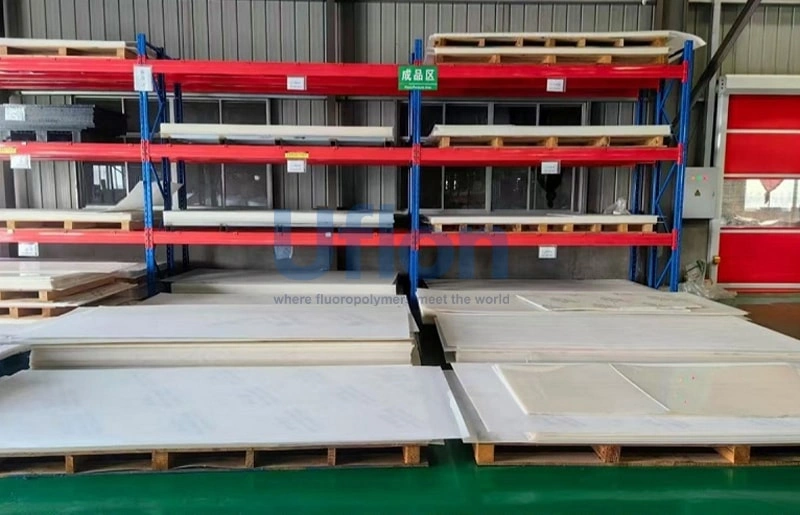
The tight-lined structure process:firstly treating the surface of a PTFE sheet, then using the adhesive to bond it to a metal substrate to enhance adhesion. This technology is suitable for lining structures in large equipment and applications with frequent pressure and temperature changes. The effectiveness of the surface treatment and the quality of the adhesive directly determine the stability of this type of lining and the safety of the equipment.
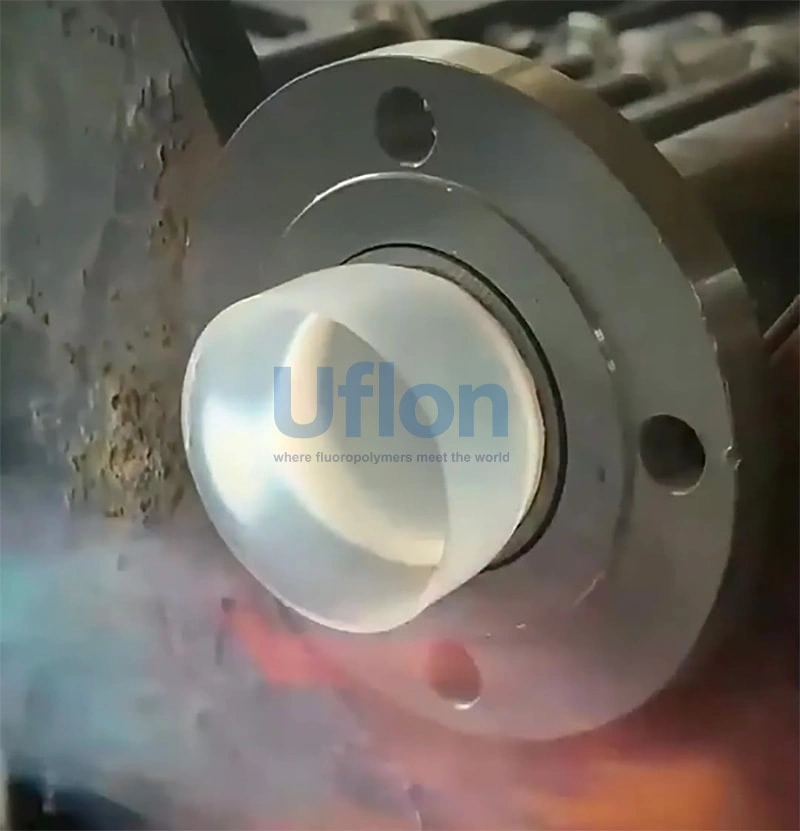
Introduction to PTFE lining molding technology
1.Liner Winding Molding Technology
A thin strip of PTFE is uniformly wound onto a specialized mold, sintered, and then pressed into the workpiece cavity. The winding method utilizes integral sintering molding technology, eliminating localized weak points compared to welding molding, and resulting in more uniform mechanical and chemical properties of the lining material. Different winding methods can obtain different types of products.
The relatively complex molding technology, high impurity content on the lining surface, and poor corrosion resistance are disadvantages of the winding method. Therefore, this method is not suitable for high-temperature applications.
2.Liner Isostatic Molding Technology
Uniformly applying liquid pressure to the deformable elastic mold. Under constant pressure difference, the elasticity of the mold compresses the PTFE powder, causing it to adhere tightly to the lining wall. This avoids the problem of excessive localized stress caused by varying lining thicknesses in complex-shaped workpieces.
Liners produced by this process have more uniform density and lower internal stress. Valves that manufactured by this technology are widely used in highly corrosive environments such as petroleum, chemical, and pesticide industries. Compared to similar components, they offer higher operating temperatures and a wider range of applications.
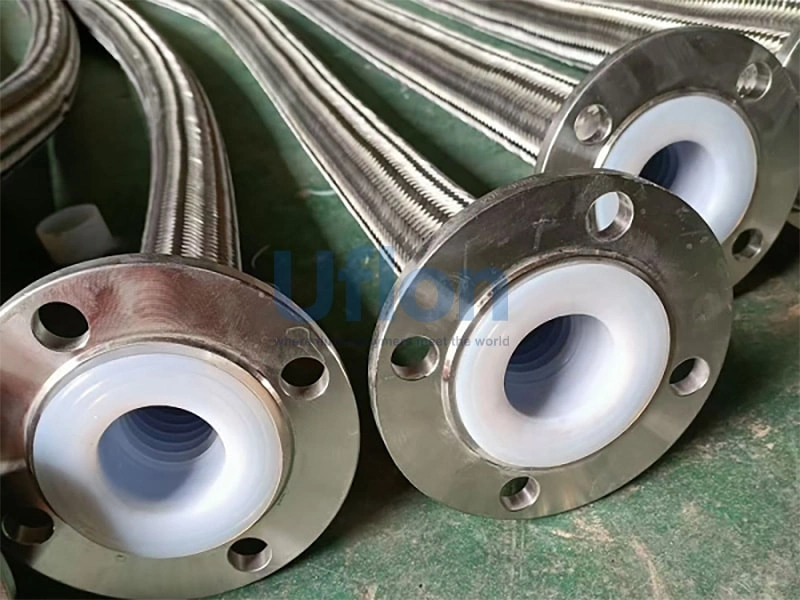
3.Liner Metal Mesh Molding Technology
The main components of metal mesh lining products are PTFE lining metal mesh, fluoroplastic welded film, glass fiber, adhesive, and metal shell.
PTFE strip is wound in two stages. A metal mesh is laid before the second winding to strengthen the lining and overcome the vulnerability of a single PTFE lining to temperature changes, improving its high-temperature and negative-pressure resistance. However, due to the significant difference of expansion coefficients between metal mesh and PTFE, cracks are prone to occur at the flanges of the lining, leading to corrosion, leakage and other malfunctions, and its service life cannot be guaranteed.
To improve and avoid defects such as lining deformation, wrinkling, and collapse caused by temperature changes in chemical equipment, as well as breakage and leakage due to stress differences during the flange setting process, diamond-shaped metal mesh has gradually replaced square metal mesh in recent years, effectively solving these problems.
4.Composite Molding Technology for Liners
Sintering, demolding, surface modification of the lining, bonding, heating and cooling, pressurization, and high-temperature plasticizing are the main processes in the composite molding technology of PTFE lining.
First, a thin PTFE strip is wound around the mold surface, and then alkali-free glass fiber is wound around the outside. After sintering, demolding, and high-temperature heat treatment, it is allowed to cool naturally. The PTFE lining surface is chemically modified using the sodium naphthalene method, after cleaning the surface of dirt, a fluoride adhesive is evenly coated. The lining is then formed by heating both ends to create flanges. Finally, pressurization and high-temperature plasticizing are used to ensure a tight bond between the metal matrix and the lining.
This process increases the adhesion between the lining and the substrate, eliminates internal stress, increases the lining density, and effectively solves problems such as wrinkling and flattening of the lining under conditions of excessive temperature or negative pressure. However, its molding process is complex and requires strict operational control.
Conclusion
The quality of the lining is crucial to ensuring the normal operation of equipment. Each molding process has its own advantages and disadvantages. The appropriate lining molding process should be selected by comprehensively considering factors such as the pressure, temperature, and corrosiveness of the medium in the environment where the equipment is located. Understanding the molding process of PTFE lining is beneficial for comprehensively analyzing the causes of lining failures such as leakage and cracking, and for taking targeted measures to improve lining life and ensure the safe operation of equipment.
About Uflon
As a professional and service-oriented fluoropolymer manufacturer, Uflon specialized in high-performance PTFE material supply and technical support,and PFOA-free, meet the environmental requirements and global standards.
100 meters northwest of Changiiafang Village Committee, Gaoging County, Zibo City, ShandongProvince
Copyright © 2025 by Zibo Uflon New Material Technology Co., Ltd. All Rights Reserveds
Privacy Policy