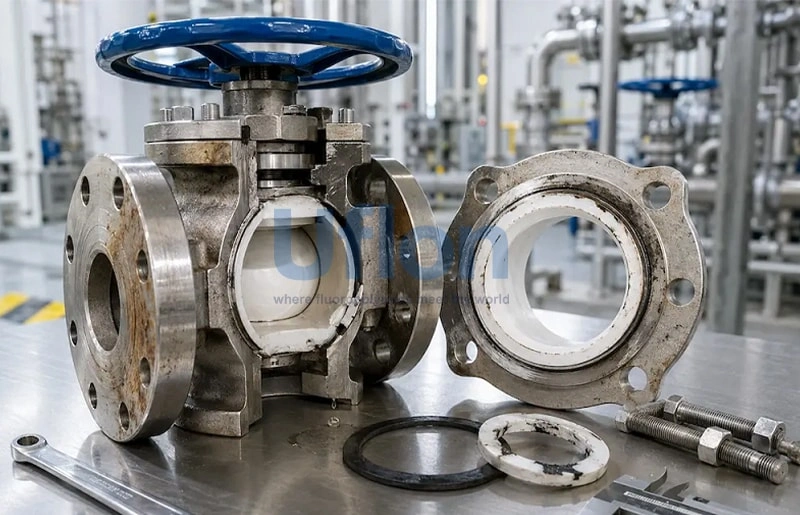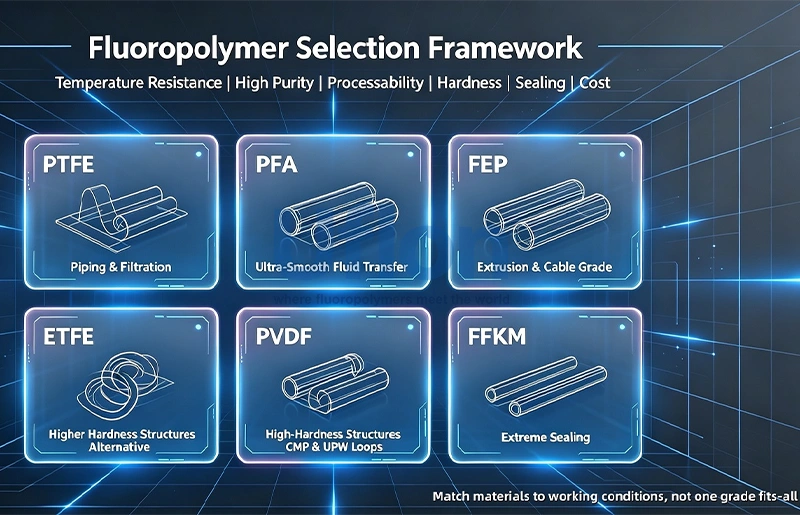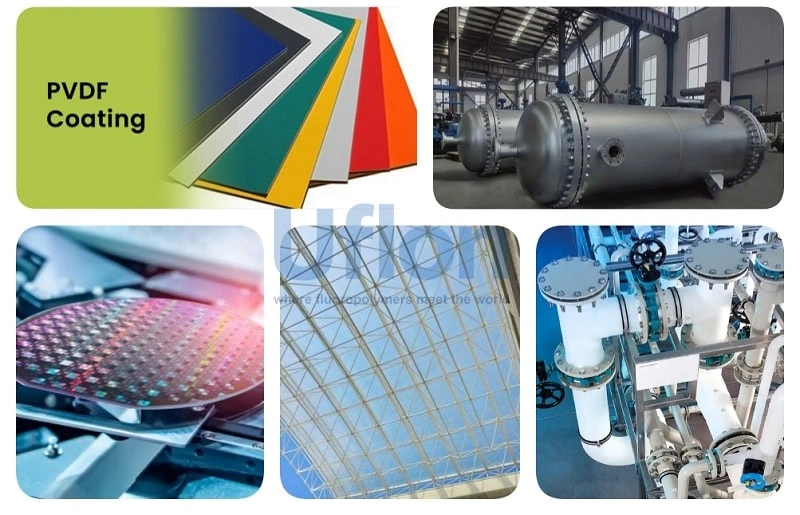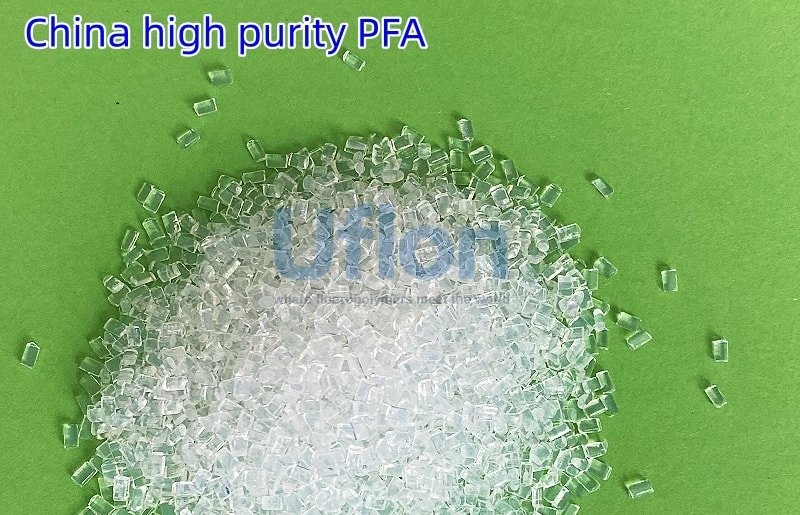
Due to its excellent chemical resistance, high and low temperature stability, and low coefficient of friction,PTFE material is widely used in various fields such as industrial manufacturing, electronics, aerospace and others. Let’s learn its main molded products and manufacturing processes.
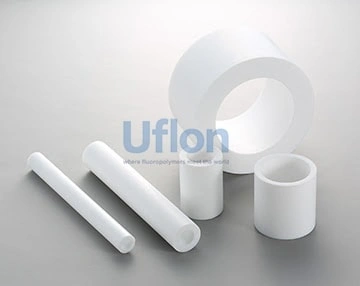
Main molded products from PTFE material
1.PTFE Sheet
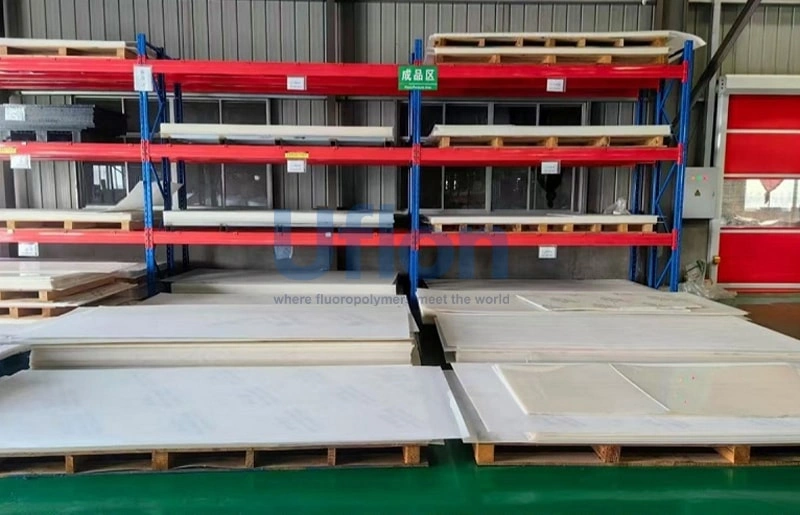
It is manufactured through molding or turning processes, followed by sintering and cooling. It possesses resistance to high and low temperatures (-192℃~260℃), corrosion resistance, and insulation properties, and is commonly used in seals, gaskets, etc.
PTFE sheet is divided into moulded sheet and skived sheet ; the latter is made by machining sintered rods, with a thickness as low as 0.04mm.
2.PTFE Tube
It is produced by push molding or extrusion processes. Push molding forces the blank into a fibrous structure through a conical die, and then sinter and solidify it, which is suitable for thin-walled pipes; while paste extrusion is suitable for thick-walled continuous pipes.
3.PTFE Film
It is produced by turning sintered rods or extrusion,the thickness is controllable. It is used for insulating materials, non-stick coatings, etc.
4.PTFE Sealing (gasket,seals)
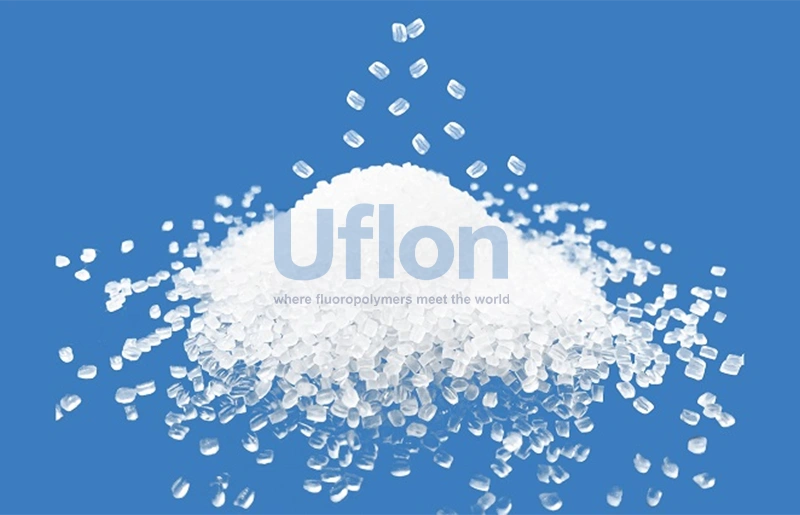
Mostly adopt the molding process by PTFE molding powder, and the products have high corrosion resistance and sealing performance.
5.PTFE Fibers and Composite materials
Adopt the paste extrusion by PTFE fine powder to form fibrous products,or combined with other materials to enhance their properties.
Main process technologies of PTFE material
1.Compression and sintering
Process step: Blank preparation (cold pressing 30~50MPa) → Sintering (370~380℃) → Cooling (gradient cooling).
Features: Suitable for thick-walled, discontinuous products (such as plates and rods); heating/cooling rates must be controlled to prevent cracking and deformation.
2.Push molding
PTFE fine powder mixed with aid to extrude the fiber shape through mould and then sinter. It is suitable for thin-walled pipes and small-diameter rods, with good flexibility and tensile strength.
3.Paste extrusion molding
Suitable for continuous products such as pipes and films, with high production efficiency and good product density and uniformity.
4. Isostatic molding
Utilizing high-pressure fluid to uniformly compact powder, making it suitable for complex shaped products. It is divided into internal and external hydraulic methods and can produce metal-PTFE composite parts.
5.Machining
Adopt turning , drilling and other secondary processing to the sintered sheets or rods, obtaining the precision parts( such as thin-walled bushings).
Key process issues and solutions of PTFE material
1.Cracks/Deformation: Caused by poor resin thermal stability or excessively rapid cooling.
Should optimize the sintering temperature (360~375℃) and holding time.
2.Air Bubbles: Incomplete removal of air from the billet.
Should preheat the resin and slowly increase the pressure.
3. Dimensional Deviations: Mould design should match with resin shrinkage rate (3%~5%), and the feed rate must be precisely controlled.
About Uflon’s PTFE
As a professional and service-oriented fluoropolymer manufacturer, Uflon specialized in high-performance PTFE material supply and technical support,and PFOA-free, meet the environmental requirements and global standards.
100 meters northwest of Changiiafang Village Committee, Gaoging County, Zibo City, ShandongProvince
Copyright © 2025 by Zibo Uflon New Material Technology Co., Ltd. All Rights Reserveds
Privacy Policy