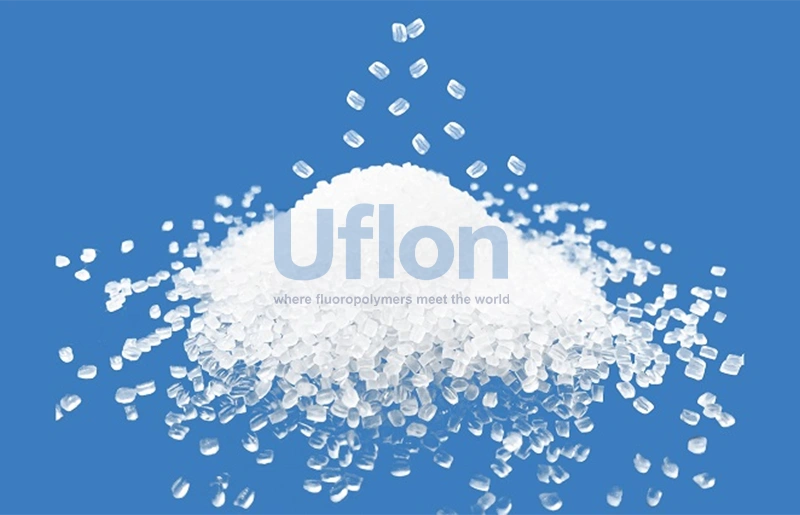
Among fluoropolymers, FEP resin is widely favored in electronics and electrical engineering, chemical engineering, medical treatment, aerospace and other fields for its excellent properties. It perfectly combines the superior properties of PTFE and the good processability of PFA, making it an ideal choice for many applications. Today, we will systematically introduce the performance characteristics, molding and processing technologies, and extensive application fields of FEP resin.
I. Properties of FEP Resin
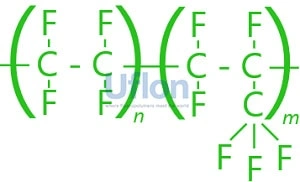
FEP is a melt-processable fluoropolymer copolymerized from tetrafluoroethylene (TFE) and hexafluoropropylene (HFP). The introduction of trifluoromethyl (–CF₃) side chains preserves the excellent chemical stability and electrical properties of PTFE, while greatly improving its thermoplastic processability.
1.1 Basic Physical Properties
Density: 2.12–2.18 g/cm³ (typical: 2.15 g/cm³)
Melting point: 260–280℃
Continuous service temperature: −85℃ to 200℃ (long-term); −200℃ to 260℃ (short-term)
Tensile strength: 14–29 MPa (depends on grade and process condition)
Elongation at break: 175–320%
Flexural modulus: approx. 520–660 MPa
1.2 Chemical & Thermal Properties
Chemical resistance: Similar to PTFE; resistant to most strong acids, alkalis, oxidizers and organic solvents.
Thermal stability: Long-term max. service temp. 200℃, short-term 260℃; decomposition temp. 400℃.
Flame resistance: Non-flammable, oxygen index (OI) >95%, meet with UL94 V-0.
Weather-ability: Excellent resistance to UV, ozone and weathering.
1.3 Electrical Properties
Dielectric constant (ε): approx. 2.1 (1 MHz), low frequency dependence.
Dissipation factor (tanδ): <7×10⁻⁴ (1 MHz), outstanding insulation.
Volume resistivity (ρᵥ): >10¹⁷ Ω
Surface resistivity (ρₛ): >10¹⁵ Ω
Dielectric strength: >20 kV/mm
1.4 Performance Comparison & Selection Guide
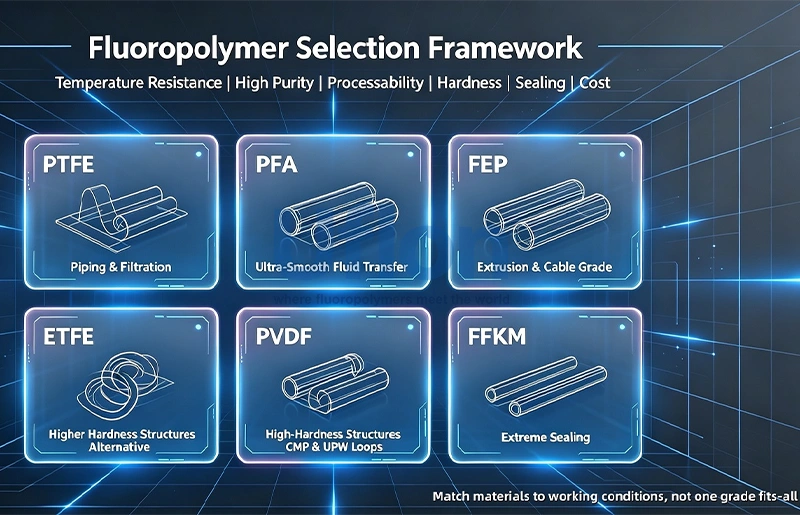
FEP resin offers the optimal comprehensive performance and cost balance among melt-processable fluoropolymers, making it ideal for applications requiring complex molding, high purity, and superior insulation or corrosion resistance.
II. Molding and Processing of FEP resin
FEP is a typical thermoplastic that can be processed by nearly all conventional thermoplastic methods.
2.1 Injection Molding
Main process for precision parts such as connectors, valve components and small containers.
Crucial process parameters:
Barrel temperature: 330–400℃, adjusted according to MFR
Mold temperature: 205–235℃; higher temperature improves gloss and reduces stress
Injection pressure: 35–140 MPa (high pressure needed for high melt viscosity)
2.2 Extrusion Molding
Used for tubes, wire insulation, films and sheets.
Crucial process parameters:
Processing temperature: 315–390℃
Cooling: extrudate cooled rapidly in water bath or chill rolls at 20–50℃
2.3 Other Processes
Blow molding & thermo-forming: for hollow parts, shrink tubes and sheets
Compression & transfer molding: for large thick-walled parts or insert-molded products, at 315–375℃
2.4 General Processing Principles
Equipment must be thoroughly cleaned to avoid contamination.
Precise temperature control is critical for high-quality products.
III. Application Fields of FEP Resin
3.1 Electronic & Electrical Industry
High-frequency coaxial cable insulation: Preferred for high-speed data cables due to stable low dielectric constant and extremely low dielectric loss.
Special wire & cable sheath: Used in high-temperature, corrosion-resistant and flame-retardant harsh environments.
3.2 Chemical, Semiconductor & High-Purity Fluid Handling
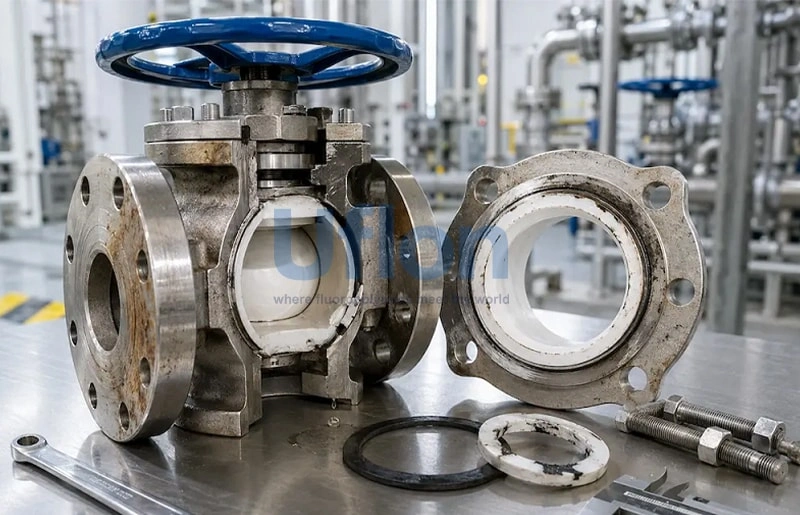
Anti-corrosion linings & coatings: For reactors, storage tanks handling corrosive media.
High-purity fluid systems: To make pipes, fittings and bottles for ultra-pure chemicals delivering in semiconductor processing, preventing ionic contamination.
3.3 Other High-End Fields
Aerospace: Lightweight cable insulation and special components for aircraft and satellites, meeting flame retardant and extreme temperature requirements.
New energy: Used in proton exchange membrane substrates for fuel cells and sealing materials for electrolyzers.
IV. Future Development of FEP Resin
High performance: Improve temperature resistance, mechanical strength and radiation resistance.
Functional: Develop modified grades with conductivity, thermal conductivity and reinforcement.
Sustainability: Research recycling and reuse technologies for FEP.
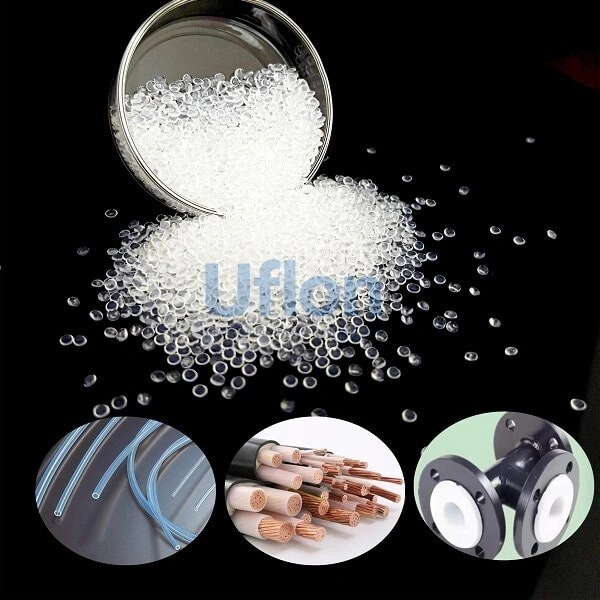
As a representative fluoropolymer manufacturer, FEP resin is our advantageous product, we offering customer with wide MFR selection, ordinary grades and stress cracking resistance grades, equipped with our technical support.
100 meters northwest of Changiiafang Village Committee, Gaoging County, Zibo City, ShandongProvince
Copyright © 2025 by Zibo Uflon New Material Technology Co., Ltd. All Rights Reserveds
Privacy Policy